Antarctica, the Earth’s most southern continent, is full of natural treasures. Under its thick ice, scientists believe there could be oil, gas, coal, and even gold and other valuable minerals. It also holds two-thirds of the world’s fresh water in the form of ice.
Today, countries are not allowed to mine or use these resources. A special agreement called the Antarctic Treaty, signed in 1959, protects the continent. It states that Antarctica should only be used for peaceful purposes and scientific research. Another law added in 1991 bans mining until at least 2048.
Even though mining is not allowed, countries are showing more and more interest in Antarctica. China, Russia, and others are building more research stations and fishing in the surrounding waters. According to experts, these countries, and others, are preparing for future resource use.
As climate change melts ice, getting to the continent’s resources is becoming easier. But this could harm the environment and wildlife.
The big question remains: is the world willing to protect Antarctica, or will countries try to use its resources? What happens in the next few decades will decide the future of this unique place.
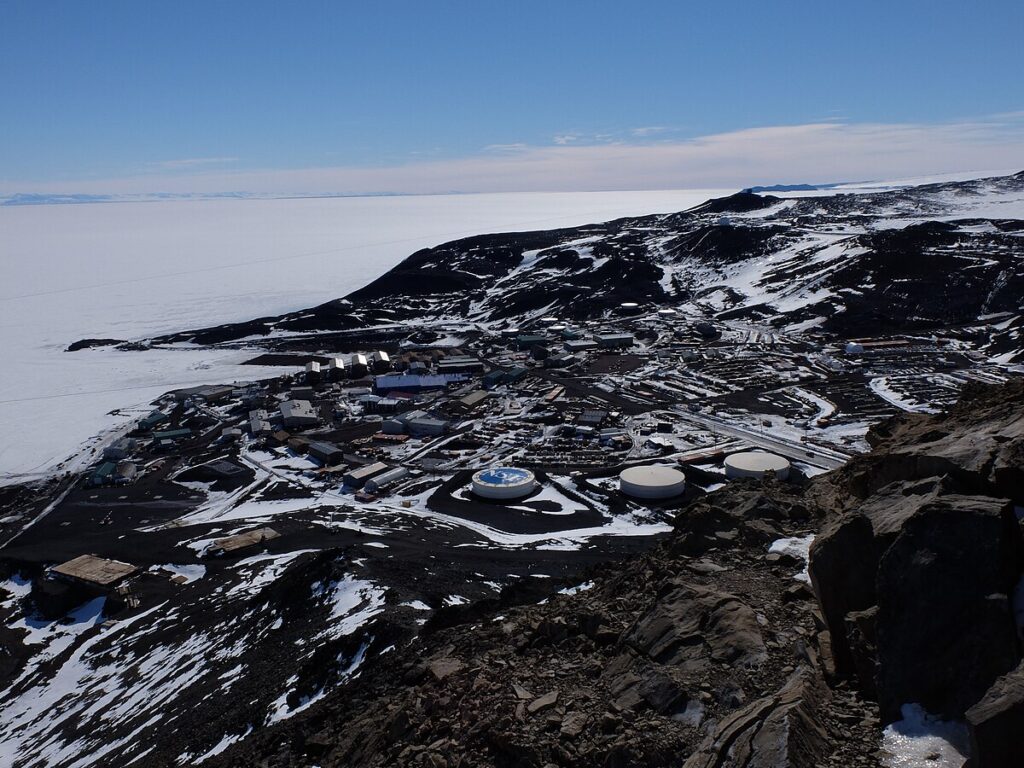
McMurdo Station – The largest research station on the continent
Image:Marco Feldmann/FH Aachen, CC BY 2.0,
via Wikimedia Commons
.jpg)
Words
- according to = as said by …
- agreement = when two or more countries promise to do something
- ban = forbid
- climate change = the warming of the Earth’s atmosphere
- decade = a period of ten years
- environment = nature; the world around us
- even though = while
- harm = endanger
- law = rule
- mine = dig something out of the Earth
- protect = defend, keep safe
- purpose = plan or what you want to do
- remain = here: still exist
- research = to study something in order to learn more about it
- research station = a place where you study something
- resources = useful metals or minerals in the Earth
- scientist = a person who is trained in science and works in a lab
- sign = to put your name on a document
- state = to say officially
- surrounding = near or around a place
- treasure = something very valuable and important
- unique = only one of its kind; something special
- valuable = very important and worth a lot
[show_wp_shopping_cart][wp_compact_cart]